🧠 Semantic SEO for AI-Driven Rankings: The Ultimate Guide
What Is Semantic SEO for AI-Driven Rankings?
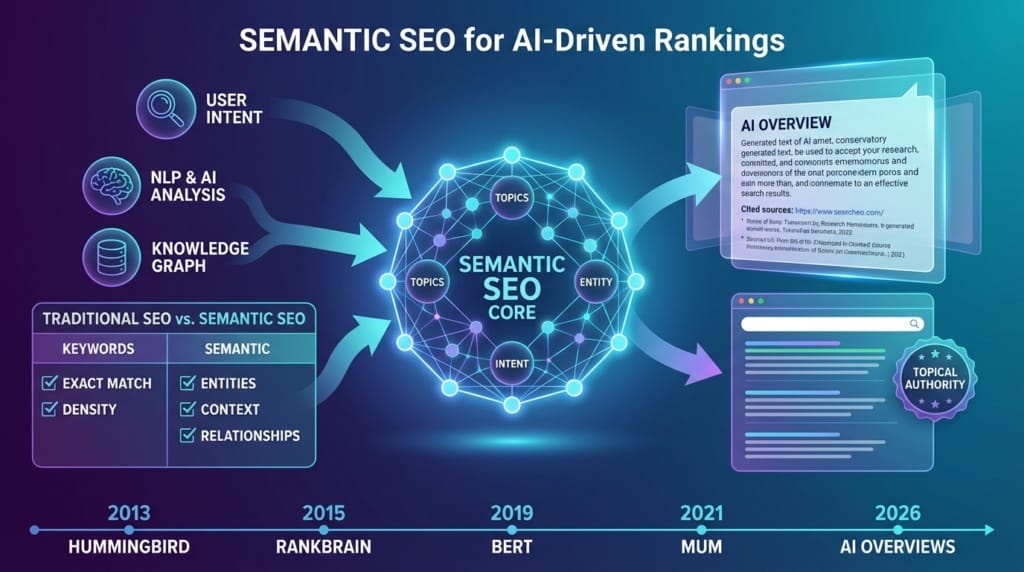
Semantic SEO for AI-Driven Rankings is the strategic process of structuring digital content around entities and topical depth rather than isolated keywords. This approach ensures large language models like ChatGPT and Google AI Overviews can accurately extract, understand, and cite your brand as an authoritative source in generative responses.
Jump to Passage. . .
🚀 The Paradigm Shift to Generative Engine Optimization
Texas businesses face a critical inflection point in digital marketing. The transition from traditional search engines to generative AI platforms requires a complete overhaul of existing digital strategies. Search behavior has fundamentally changed. Users no longer want to click through ten blue links to find an answer. They expect immediate, synthesized responses. This shift means your website must evolve from a destination into a structured data source that feeds these intelligent systems.
To succeed, organizations must adopt Generative Engine Optimization. This methodology focuses on making your content machine-readable and semantically rich. When a user asks a complex question, the AI engine scans its training data and real-time web index to construct an answer. If your content lacks Entity Clarity or semantic structure, the engine will bypass your site in favor of a competitor whose data is easier to parse. You must build a digital ecosystem that explicitly defines relationships between concepts, products, and your brand.
This is not a future projection. The transformation is actively occurring. Companies that fail to adapt their infrastructure will experience a severe drop in organic visibility. The goal is no longer just driving traffic to a landing page. The goal is becoming the foundational truth that AI systems rely upon to educate their users.
🧠 Unleashing the Power of Topical Authority
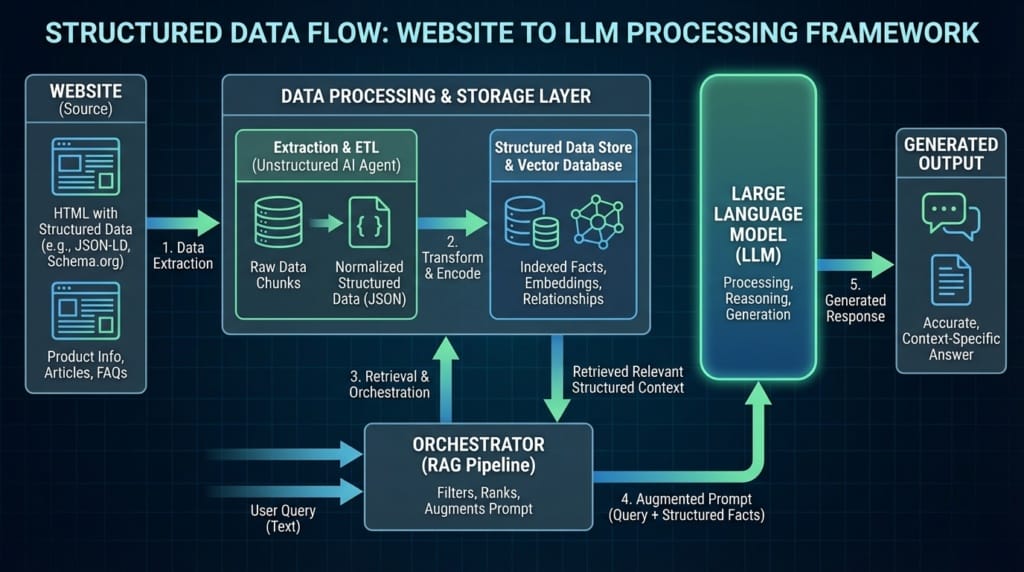
Search algorithms no longer reward isolated pages stuffed with exact-match keywords. Instead, topical authority is now the strongest on-page ranking factor. This means search engines and AI models evaluate your entire domain to determine if you possess comprehensive expertise on a specific subject. A single well-written article is insufficient. You must create an interconnected web of content that covers every conceivable subtopic, question, and edge case related to your industry.
For a Dallas commercial real estate firm, ranking for basic terms requires proving deep knowledge of zoning laws, property taxes, structural engineering, and local market trends. When an AI model evaluates your site, it looks for semantic completeness. If you claim to be an expert in commercial leasing but lack content explaining triple net leases, the model detects a semantic gap. This gap diminishes your overall Topical Authority and reduces the likelihood of your content being cited in Google AI Overviews.
Building this authority requires a systematic approach. You must map out the entire knowledge graph of your industry. This involves identifying the core entities and understanding how they relate to one another. By structuring your content to reflect these relationships, you provide AI engines with a clear, logical framework to navigate and understand your expertise.
📋 Steps to Establish Unshakable Topical Authority
Executing a topical authority strategy requires strict adherence to content architecture principles. Follow this framework to structure your knowledge base.
- 🎯 Entity Mapping: Document every person, place, concept, and tool relevant to your business model.
- 🏗️ Pillar Construction: Develop massive, comprehensive guides that define the core entities.
- 🔗 Cluster Expansion: Write specific, detailed articles answering distinct questions about each entity.
- 🕸️ Semantic Linking: Connect cluster articles to pillar pages using exact-match entity anchor text.
- 🔄 Continuous Updating: Refresh content quarterly to ensure facts align with the current knowledge graph.
🏆 Becoming a Citation Champion
The primary metric of success has transitioned from ranking first to earning the citation. Visibility inside AI answers matters more than traditional blue-link rankings. When a user queries an AI engine, the system generates a synthesized response and provides footnotes or clickable links to its sources. Earning that specific citation is the new gold standard for digital visibility. Brands cited inside AI Overviews see 35% higher click-through rates. This proves that users trust and click on the sources that AI models validate.
Achieving Citation Visibility requires a different formatting strategy. AI models prefer content that provides direct, unambiguous answers. They look for factual density. If your content is buried beneath long, meandering introductions, the AI crawler will struggle to extract the necessary facts. You must structure your paragraphs to deliver the core answer immediately, followed by supporting data. This format aligns perfectly with how large language models process and retrieve information during the generation phase.
Furthermore, you must optimize for the specific platforms your audience uses. While Google dominates traditional search, generative discovery is fragmented. You must ensure your content is accessible and readable by ChatGPT, Claude, and other emerging platforms. As detailed in the 2026 AI SEO Statistics, adapting to this multi-platform reality is non-negotiable for enterprise growth. You must monitor your brand's Share of Model across all major generative interfaces.
⚙️ Mastering AI Content Integration
Content creation workflows must adapt to new realities. Many marketing departments struggle with the balance between human expertise and automated generation. The data shows that AI-generated content now appears in 17.31% of top Google search results. This indicates that search algorithms do not inherently penalize machine-written text. However, they heavily penalize low-quality, inaccurate, or unhelpful content regardless of its origin. The key is implementing a hybrid workflow.
Texas businesses should leverage tools like Jasper for initial drafting, structuring, and semantic expansion. The AI can quickly generate outlines based on entity relationships and ensure all necessary LSI keywords are included. However, human experts must review, refine, and inject original insights into the draft. A purely automated approach often results in generic content that lacks the unique perspective required to build true authority. The human element provides the nuance and experience that AI models cannot replicate.
To maximize integration, you must also understand how search engines view this content. Google's helpful content guidelines emphasize experience, expertise, authoritativeness, and trustworthiness. You must explicitly demonstrate these qualities. Include author bios with verified credentials. Link out to authoritative sources using fundamental SEO principles to validate your claims. By combining the efficiency of AI generation with rigorous human editorial standards, you create content that is both semantically rich and highly trustworthy.
🔍 Optimizing for the Long Tail in AI Discovery
Generative engines excel at answering highly specific, conversational questions. Users treat these platforms like digital consultants, typing out multi-sentence queries detailing their exact situations. Consequently, over 68% of terms triggering AI Overviews receive 100 or fewer monthly searches. Traditional SEO strategies often ignore these low-volume keywords because the return on investment seemed too low. In the era of AI-Driven Rankings, these Long-tail Queries are your most valuable assets.
To capture this traffic, you must anticipate the hyper-specific questions your customers ask. A Houston logistics company should not just target "freight shipping." They must target queries like "How do changing customs regulations in Mexico impact cross-border cold chain logistics for pharmaceuticals?" This level of specificity matches the exact intent of an AI user. When you provide a comprehensive answer to this complex question, you become the definitive source for that specific entity intersection.
🛠️ Tools for Uncovering Long-Tail Opportunities
Identifying these conversational queries requires specialized software. Standard keyword research tools often fail to capture zero-volume or highly complex questions.
- 🤖 Perplexity AI: Use this platform to reverse-engineer queries. Ask it complex industry questions and analyze which sources it cites to identify content gaps.
- 📊 SE Ranking: Leverage their advanced competitive analysis features to find specific, low-difficulty questions your competitors are ignoring.
- 🗣️ Customer Interviews: Record sales calls and extract the exact phrasing prospects use when describing their pain points.
- 🧠 Semantic Mapping: Use entity extraction tools to find related concepts that naturally form long-tail combinations.
🧰 The Future-Proof Toolkit for AI-Driven SEO
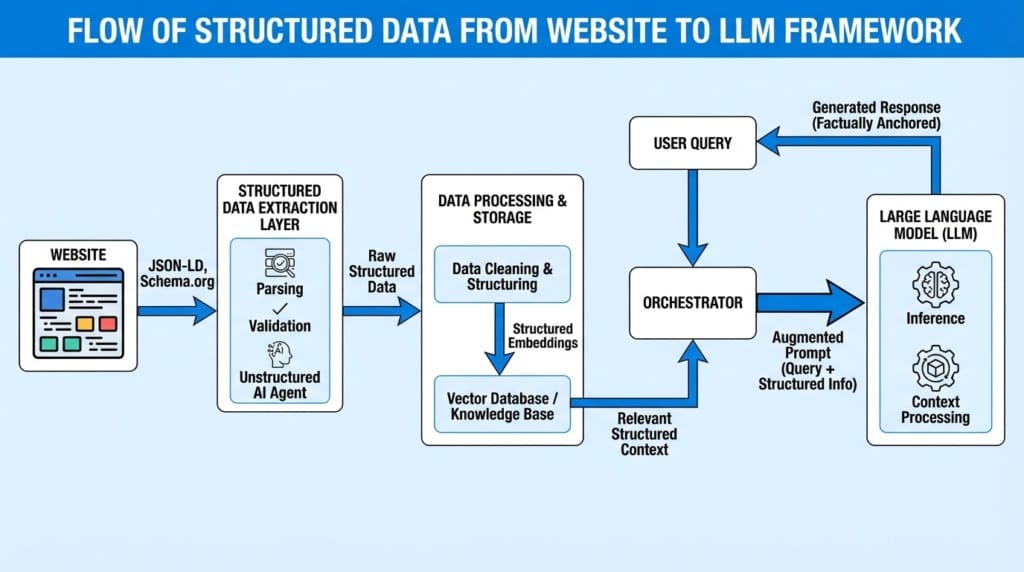
Executing a Semantic SEO strategy requires a sophisticated technical infrastructure. You cannot rely on basic plugins and manual formatting. You must implement advanced systems that explicitly communicate your content's meaning to machine learning algorithms. Tools like ClickRank assist in mapping the semantic relationships between your pages, ensuring your internal linking structure reinforces your topical clusters. However, the most critical component of this toolkit is technical markup.
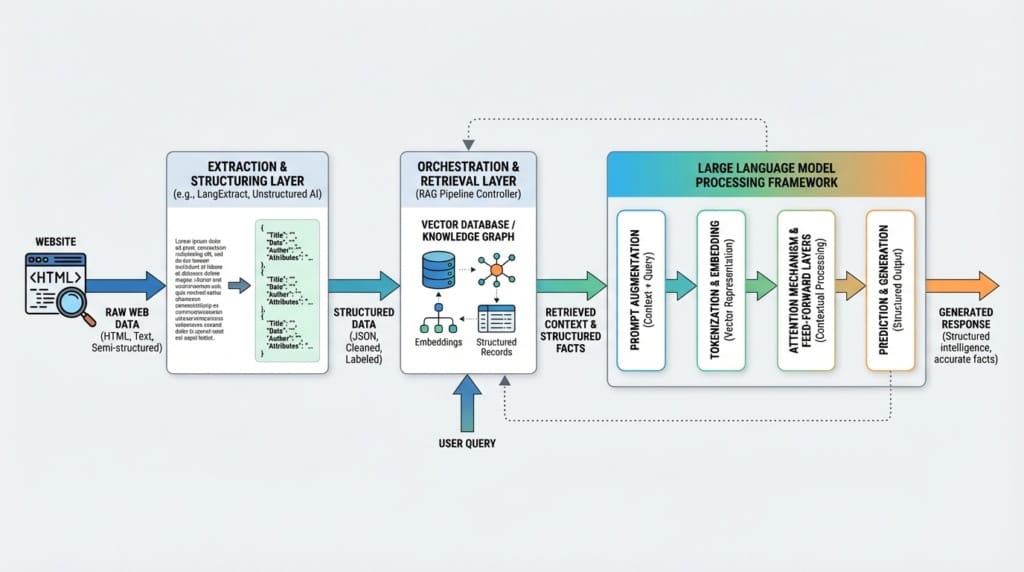
You must deploy comprehensive Schema Markup across your entire domain. This is the standardized vocabulary that search engines use to understand the context of your data. Without it, AI models must guess the meaning of your text. With it, you provide a definitive, machine-readable map of your entities. A comprehensive Generative Engine Optimization Guide highlights that implementing this Structured Data is no longer optional. It is the fundamental prerequisite for AI visibility.
To ensure flawless implementation, developers should strictly follow the official Schema.org documentation and validate their code using Google's structured data guidelines. You must mark up organizations, authors, articles, FAQs, and products. The deeper and more interconnected your schema, the easier it is for an AI engine to build a knowledge graph around your brand.
📊 Strategic Comparison: Legacy vs. Generative Optimization
Understanding the technical differences between old and new methodologies is crucial for resource allocation. The following table outlines the fundamental shifts in optimization priorities.
| ⚙️ Optimization Vector | 📉 Traditional SEO (Legacy) | 🚀 Generative Engine Optimization (Current) |
|---|---|---|
| Primary Goal | Rank #1 on SERP | Earn the AI Citation |
| Content Focus | Keyword Density | Entity Relationships & Depth |
| Technical Priority | Page Speed & Backlinks | Schema Markup & Structured Data |
| Target Queries | High-Volume Short Tail | Conversational Long-Tail |
📈 Trends Shaping the Future of SEO
The velocity of user adoption regarding AI search is staggering. Recent analytics show that AI search traffic increased 527% year-over-year. This exponential growth indicates a permanent change in how humanity accesses information. Users are realizing that conversational interfaces provide faster, more synthesized answers than scrolling through traditional search results. This data is confirmed by the Previsible AI Traffic Report, which highlights the rapid migration of high-intent users toward LLM-driven discovery.
As this traffic scales, the importance of Entity Clarity will compound. Search engines are evolving into answer engines. They will rely heavily on verified knowledge graphs to combat misinformation and hallucinations. Brands that establish themselves as verified entities today will dominate the generative landscape tomorrow. You must focus on digital PR, earning mentions on highly authoritative sites, and ensuring your brand name is consistently associated with your core industry concepts across the entire web.
⚖️ Navigating the Controversies
This fundamental shift brings significant debate and anxiety within the marketing community. A major point of contention is the zero-click phenomenon. Statistics indicate that only 8% of users click traditional links when AI summaries appear. Many business owners fear this means the death of website traffic. If the AI provides the complete answer, why would the user visit the site? This fear is valid but requires a strategic pivot rather than panic.
The traffic that does click through from an AI citation is exceptionally high-intent. These users have already read the synthesized answer and are seeking deep, transactional engagement. Furthermore, platforms like ChatGPT are continuously refining their interfaces to better highlight sources. The strategy is not to fight the AI, but to feed it. By providing the exact data the AI needs, you ensure your brand remains visible in the exact moment the user makes a purchasing decision. You must optimize for influence, not just raw traffic volume.
🎯 Securing Your Competitive Edge in AI Search
The era of manipulating search results with shallow content and exact-match keywords is permanently closed. Semantic SEO for AI-Driven Rankings demands a commitment to genuine expertise, rigorous technical structuring, and comprehensive entity mapping. Texas businesses that embrace this reality will transform their digital presence into an indispensable data source for the world's most advanced AI models. Those who cling to legacy tactics will simply disappear from generative results.
Your immediate directive is clear. Audit your domain for semantic gaps. Implement exhaustive schema markup. Restructure your content to directly answer complex, long-tail queries. By executing these strategies, you stop chasing algorithms and start defining the knowledge graph. Will your brand be the authoritative citation, or will you surrender your market share to competitors who speak the language of generative engines?
❓ Frequently Asked Questions About Semantic SEO for AI-Driven Rankings
What is the main benefit of Semantic SEO?
The primary benefit is establishing your brand as a trusted entity. This ensures large language models cite your content directly, driving high-intent traffic and improving overall visibility in generative search results.
How does Schema Markup affect AI rankings?
Schema markup translates your web content into machine-readable code. It explicitly defines entities and relationships, allowing AI engines to extract facts accurately and confidently cite your site as a source.
Why are long-tail queries important for AI search?
AI users type conversational, highly specific questions. Targeting long-tail queries aligns perfectly with this behavior, allowing you to capture high-intent traffic that traditional short-tail keyword strategies miss entirely.
Can I use AI to write all my SEO content?
No. While AI tools accelerate drafting, publishing unedited AI content risks hallucinations and algorithm penalties. You must use a hybrid approach, injecting human expertise and verified facts to build true topical authority.
What is Entity Clarity in SEO?
Entity clarity is how easily an AI model can identify and understand a specific concept, brand, or person on your site. Consistent naming conventions and structured data are required to achieve high entity clarity.
How do I measure success in AI-driven search?
Shift focus from traditional rank tracking to measuring Citation Visibility. Track how often your brand appears in AI Overviews, monitor referral traffic from AI platforms, and measure your Share of Model across different engines.
 SEO SOLUTIONS TEXAS BLOG
 SEO SOLUTIONS TEXAS BLOG
We are a results-driven digital marketing and AI SEO agency focused on increasing website traffic, improving online visibility, and generating high-quality leads for our clients.
🏆 Our Services:
Get Access To Our Texan Newsletter
Outrank. Outplay. Outperform.
We deliver elite Texas AI SEO and digital marketing strategies that amplify your presence across search engines, social media, and the platforms that matter most—so you get cited, attract ready-to-buy customers, and turn visibility into unstoppable brand growth.