Google Business Profile Mastery for Texas Markets: The Operator's Guide
How do you achieve Google Business Profile Mastery for Texas Markets?
Mastering a Google Business Profile in Texas requires verifying your listing to establish trust, optimizing visual content with at least ten high-quality photos, and maintaining 100% data accuracy. By integrating local SEO signals like proximity and review engagement, Texas businesses can dominate the local 3-pack and capture high-intent search traffic across major metropolitan hubs.

Jump to Passage. . .
Staking Your Claim: Leveraging Verification for Increased Visibility and Trust
In the wide-open range of the Texas digital marketplace, an unverified business is like a ranch without a fence. Anyone can wander in, but nobody knows who really owns the place. If you want to run a tight ship, you have to start with verification. It is the literal foundation of your digital presence. When you verify your profile, you aren't just telling Google you exist; you're taking the keys to the kingdom. You gain the power to update your hours, respond to customers, and post updates that keep your brand relevant. Statistics show that 64% of companies have already verified their Google Business Profiles, which means if you haven't, you're already trailing the herd.
Verification does more than just give you control; it builds a wall of customer trust. Think of it as the 'Certified Texas-Made' seal for your search results. Consumers are wary of ghost listings and outdated info. When Google slaps that verified badge on your profile, you become 2.7x more likely to be trusted by potential customers. In big metros like Houston or Dallas, where competition is as thick as humidity, that trust is the difference between a click and a scroll-by. Without it, you're invisible to the local 3-pack, which is where the real money is made. A verified profile isn't just a vanity metric; it's a workhorse that averages about 200 monthly clicks, driving real-world actions like direction requests and phone calls.
The Visual Roundup: The Role of Visual Content in Driving Engagement
If a picture is worth a thousand words, in the Texas market, a high-quality gallery is worth a thousand leads. You wouldn't buy a horse without looking at it first, and your customers won't visit your shop if they can't see what's inside. Visual content optimization is the secret sauce to capturing attention in a crowded Google Search result. When people search for a local service, they are looking for a vibe, a level of cleanliness, and proof of work. Photos provide that immediate social proof. Data suggests that GBP engagement statistics show businesses with 10 or more photos see double the engagement compared to those with sparse galleries.
I tell my clients to treat their photo gallery like a virtual storefront on Main Street. You need a mix of exterior shots so folks can find you, interior shots so they feel comfortable, and 'action' shots of your team doing what they do best. In Texas, where hospitality and personality go a long way, showing the faces behind the business builds an emotional bridge. Profiles with robust photo engagement receive 30% to 50% more views. This isn't just about pretty pictures; it's about feeding the algorithm. Google's AI-generated summaries now use 'Image Recognition' to understand what your business actually does. If you're a BBQ joint in Austin, having clear photos of brisket and smokers helps Google categorize you more accurately than text alone ever could.
Building a Solid Fence: Profile Completeness as a Main Ranking Driver
A half-finished Google Business Profile is like a half-built barn; it won't keep the rain out and it sure won't hold any livestock. Completeness is one of the most underrated local search ranking factors. Google wants to provide the best possible answer to a user's query. If your profile is missing a description, service list, or attributes like 'Wheelchair Accessible' or 'Veteran-Owned,' Google will pass you over for a competitor who took the time to fill out the paperwork. Industry research indicates that 75% of top-ranking pages have complete descriptions. This isn't a coincidence; it's a direct reflection of how the algorithm rewards thoroughness.
Every field in your GBP dashboard is an opportunity to inject semantic density into your listing. Don't just say you're a 'Plumber in San Antonio.' Use the description to talk about 'emergency water heater repair,' 'slab leak detection,' and 'clogged drain cleaning.' This helps you show up for long-tail keywords that your competitors might be missing. Furthermore, a complete profile acts as a conversion engine. When 45% of businesses are receiving appointment requests directly through their profile, you can't afford to have a 'Book Now' button that leads to a broken link. In the context of Google Business Profile statistics, completeness is the primary signal that tells the search engine you are an active, reliable entity worthy of the Local 3-pack.
| Profile Element | Ranking Impact | Texas Market Relevance |
|---|---|---|
| Primary Category | Critical | Defines your main 'lane' in search |
| Business Description | High | Injects local landmarks and keywords |
| Service Area | Medium | Essential for large counties (Harris, Bexar) |
| Attributes | Low-Medium | Highlights 'Texas-Owned' or 'Bilingual' |
The New Frontier: Capitalizing on AI-Driven Features for Competitive Advantage
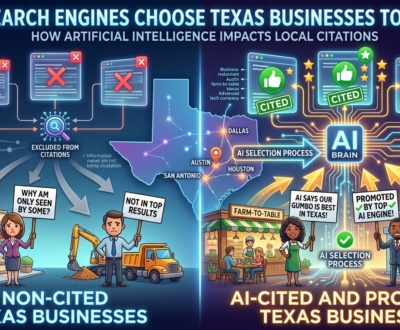
As we move through 2026, the local search landscape has shifted from simple lists to AI-generated summaries. Google's Search Generative Experience (SGE) now creates a 'snapshot' at the top of the page that answers questions before a user even clicks a link. If someone asks, 'Where is the best place for a corporate lunch in Plano?' Google's AI-powered tools will scan reviews, menus, and GBP posts to synthesize an answer. To win in this environment, you have to feed the machine. AI summaries rely heavily on the structured data within your profile. If you aren't using the 'Updates' feature to post about your weekly specials or new inventory, you're giving the AI nothing to work with.
Marketplace visibility is no longer just about being #1; it's about being the 'recommended' choice by the AI. This means review engagement is more critical than ever. The AI doesn't just count stars; it reads the sentiment and keywords within the reviews. If ten people mention your 'fast service' and 'friendly staff,' those phrases will likely show up in the AI-generated summary for your business. In Texas, where the retail and hospitality sectors are booming, being the AI's 'top pick' can lead to a massive surge in traffic. You need to treat your GBP as a living document, providing real-time updates that signal your business is active and thriving.
Avoiding the Quicksand: Adapting to Evolving Verification Standards and Common Mistakes
The rules of the trail are changing. Google has tightened its verification standards significantly, and one wrong move can land your profile in the 'suspended' bin. The most common mistake I see is 'NAP' inconsistency, which stands for Name, Address, and Phone number. If your business is listed as 'Texas Tacos' on Google but 'TX Tacos' on Facebook, the algorithm gets confused. It sees that inconsistency as a red flag for fraud. Accuracy is non-negotiable because 62% of consumers will avoid a local business if they find incorrect information online. If your hours say you're open until 9 PM but you closed at 8 PM, you haven't just lost a customer; you've earned a one-star review that will haunt your ranking for months.
Another trap is neglecting your review volume and response rate. In Texas, we value a firm handshake and a straight answer. If a customer leaves a review and you ignore it, it's like turning your back on someone in the middle of a conversation. Enterprise data shows that locations responding to at least 32% of reviews see an 80% higher conversion rate. Whether the review is glowing or grumbling, you must respond. A professional response to a negative review can actually build more customer trust than a perfect five-star rating, because it shows you're accountable. Don't let your profile become a graveyard of unanswered questions and outdated posts.
The Long Trail: Historical Context and Changes in GBP Over Time
It's worth looking back at how we got here to understand where we're going. Back in 2021, Google My Business (GMB) was retired and replaced by Google Business Profile. This wasn't just a name change; it was a digital transformation. Google moved the management tools out of a separate app and directly into Search and Maps. This change signaled that local business management was no longer a 'marketing task' but a fundamental part of 'being online.' Over the last few years, we've seen feature retirements like the hosted websites and call logs, forcing businesses to rely more on their own dedicated websites and professional tracking tools.
This evolution has made the relationship between your GBP and your actual website much tighter. You can't just have a great profile and a junk website anymore. They work in tandem. Your website provides the 'deep' context (on-page SEO), while your GBP provides the 'local' context (proximity signals). For Texas business owners, this means the 'stability mode' mindset of the past won't cut it. You have to be in a growth mindset, constantly adapting to how Google integrates new features like AI messaging and advanced booking integrations. The platform is no longer a static listing; it's a comprehensive business presence tool that requires active management.
Texas-Sized Challenges: Proximity Signals and Market-Specific Nuances
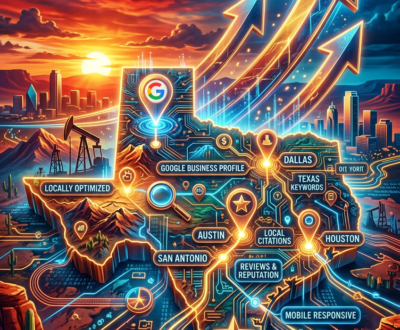
Texas is big, and that size creates unique challenges for Local SEO. In a place like the Houston metro, proximity signals are the law of the land. Google tries to show users the closest relevant business, which can be frustrating if you're a service-area business trying to cover the entire DFW metroplex. You can't just set your service area to 'Texas' and hope for the best. You have to be strategic about how you define your service zones. Property management and healthcare sectors in Texas have the highest verification rates because they understand that being 'local' is their biggest competitive advantage.
To win in these massive markets, you have to dominate your immediate backyard first. If you're in Fort Worth, don't try to outrank a Dallas competitor in their own neighborhood. Instead, focus on the specific zip codes where your trucks are already running. Use your GBP 'Posts' to mention local landmarks, high school football teams, or community events. This signals to Google that you aren't just a generic service provider; you are a part of that specific Texas community. This hyper-local approach helps you win the Local 3-pack for the searches that are most likely to convert into paying customers.
- 📍 **Harris County Strategy:** Focus on neighborhood-specific keywords like 'The Heights' or 'Katy' rather than just 'Houston.'
- 🏥 **Healthcare Nuance:** Ensure every practitioner has their own individual profile linked to the main practice to maximize 'real estate' in search results.
- 🏗️ **Real Estate/Property Management:** Keep your 'Available Units' updated via GBP 'Products' to capture high-intent renters.
Future Proofing for 2026: Trends and Consumer Behavior
Looking ahead, the successful Texas business owner isn't just reacting to today; they're preparing for tomorrow. Consumer expectations are at an all-time high. People want answers instantly. If they message you through your profile, 59% expect a response within 24 hours. If you take three days to reply, they've already called three other folks. This is where Local SEO impact on SMBs becomes undeniable. The businesses that invest in rapid-response systems and AI-powered tools will leave the 'stability mode' crowd in the dust.
We are also seeing a shift where 81% of consumers use Google as their primary tool to evaluate local businesses, far outstripping Facebook or Yelp. This means your GBP is effectively your new homepage. Economic pressures might tempt some SMBs to cut their marketing budget, but neglecting your local visibility is like cutting your phone lines to save on the bill. The 'first-mover advantage' is still up for grabs in many Texas towns where only 35% of small businesses have fully optimized profiles. If you take the time to master these tools now, you'll be the one standing tall when the dust settles.
Success Stories: How Texas Operators Are Winning the Local Game
I've seen a small 'mom and pop' retail shop in San Antonio completely transform their business by simply focusing on review volume and photo engagement. They started asking every happy customer to leave a review mentioning a specific product. Within six months, they weren't just ranking for 'gift shop'; they were the #1 result for 'handmade leather belts San Antonio.' They didn't spend a dime on ads; they just mastered the platform they already had. This is the power of a dedicated local strategy. They understood that their GBP wasn't a static listing, but a dynamic extension of their sales floor.
Another example is a multi-location dental practice in Austin that used GBP 'Updates' to share patient education videos. By providing value before the appointment, they saw a 12% increase in website click rates. They treated their profile like a social media feed, but with the added benefit of being at the very top of the Google Search results. These success stories prove that mastery isn't about having the biggest budget; it's about having the best data and the most engagement. In Texas, we don't just work hard; we work smart. Mastering your Google Business Profile is the smartest move you can make for your local visibility in 2026.
Common Questions About Google Business Profile Mastery for Texas Markets
Managing a local presence in the Lone Star State comes with its own set of questions. Here are the most frequent queries from operators on the ground.
How long does it take to see results from GBP optimization?
Most Texas businesses see an increase in visibility within 30 to 90 days. Factors like review volume, photo updates, and local competition in cities like Dallas or Houston will influence the exact timeline.
Can I manage multiple Texas locations from one account?
Yes, Google allows 'Bulk Verification' for businesses with 10 or more locations. This is essential for Texas franchises or regional chains to maintain brand consistency across different cities.
What should I do if my Texas business profile gets suspended?
First, check for NAP inconsistencies or 'keyword stuffing' in your name. Fix the errors, then submit a reinstatement request with proof of business, like a Texas sales tax permit or utility bill.
Are Google Business Profile posts still relevant in 2026?
Absolutely. While they don't directly boost 'ranking,' they feed Google's AI-generated summaries with real-time data, making your business more likely to appear in AI snapshots and 'Top Pick' lists.
How do I handle negative reviews from competitors?
Flag the review if it violates Google's policies (e.g., conflict of interest). If it stays, respond professionally. A calm, factual response often discredits the 'fake' review more effectively than an argument.
 SEO SOLUTIONS TEXAS BLOG
 SEO SOLUTIONS TEXAS BLOG
We are a results-driven digital marketing and AI SEO agency focused on increasing website traffic, improving online visibility, and generating high-quality leads for our clients.
🏆 Our Services:
Get Access To Our Texan Newsletter
Outrank. Outplay. Outperform.
We deliver elite Texas AI SEO and digital marketing strategies that amplify your presence across search engines, social media, and the platforms that matter most—so you get cited, attract ready-to-buy customers, and turn visibility into unstoppable brand growth.